Siberian Cat Grooming: Brushing, Bathing, Mats and Seasonal Care
Introduction
Grooming a Siberian cat is about keeping a thick, working coat healthy all year, not just making it look good for a day. At Siberian Pet, we treat brushing as part of everyday care, alongside feeding, play and routine health checks.
Siberians are playful, affectionate and sociable cats, with a dog-like habit of following people from room to room, so a calm grooming session can also be time together.
The Triple Coat, in Plain Words
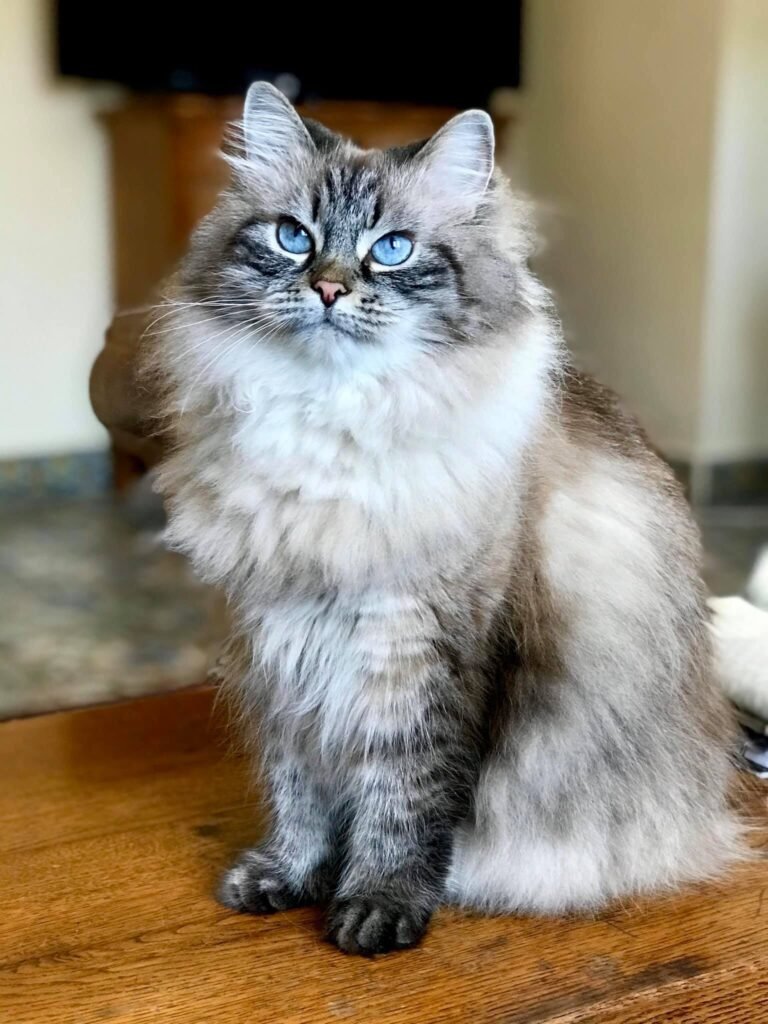
A Siberian cat has a dense, water-resistant triple coat: a soft undercoat close to the skin, longer guard hairs above it, and a water-resistant outer layer that helps shed rain and snow.
The undercoat gives warmth and bulk, the guard hairs give shape and protection, and the outer layer helps water run off instead of soaking in. The coat thickens in winter, when the undercoat grows denser, and thins again as the weather warms.
Mats form where the coat is finest, warmest and most likely to rub together: behind the ears, in the armpits, across the belly and in the trousers, the long fur at the back of the hind legs. Check those places first.
Brushing Routine
Brush a Siberian cat 2-3 times a week in a normal week, and daily in spring and fall, when the cat is blowing coat. Keep sessions short and calm, work through the coat section by section, and finish while the session is still going well.
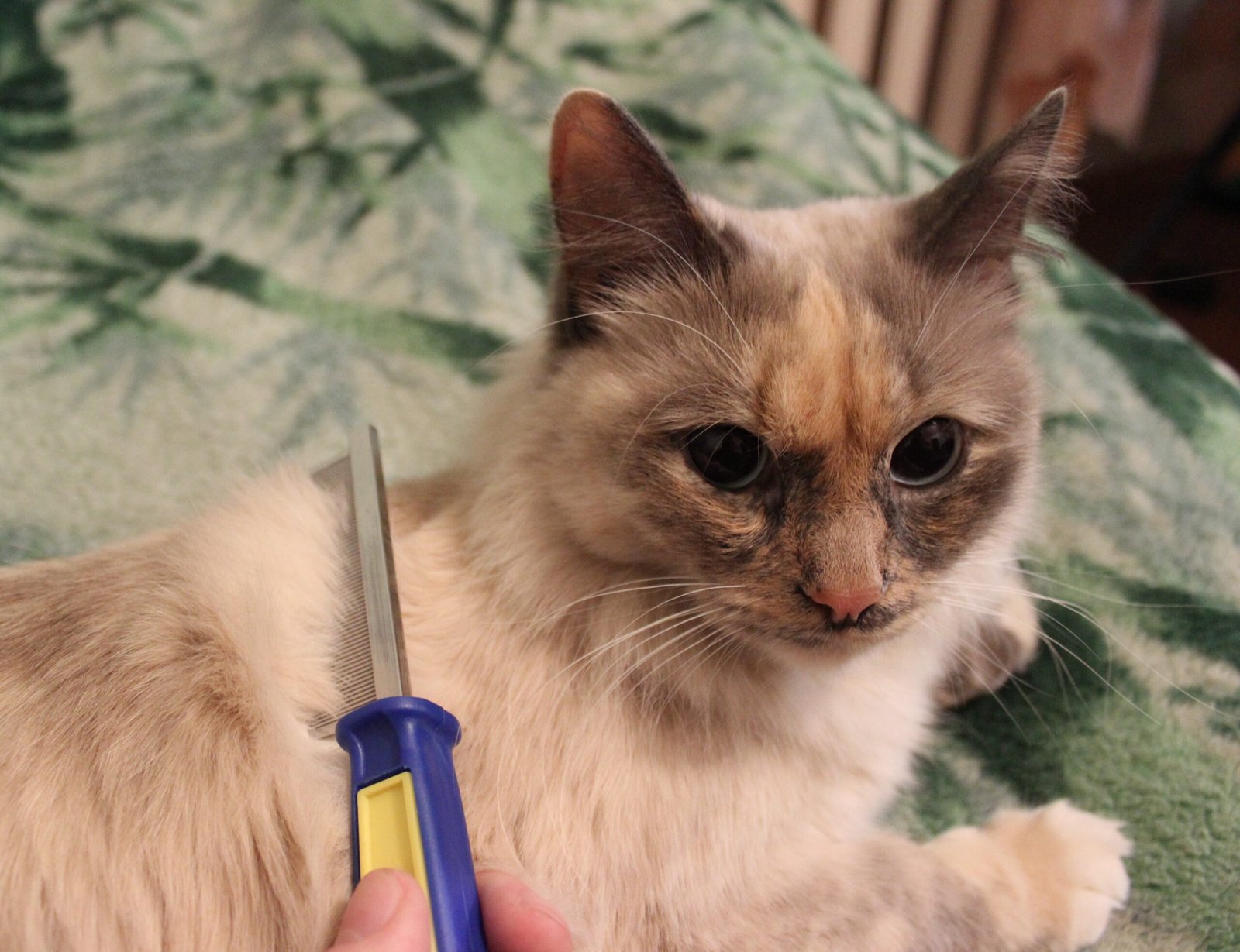
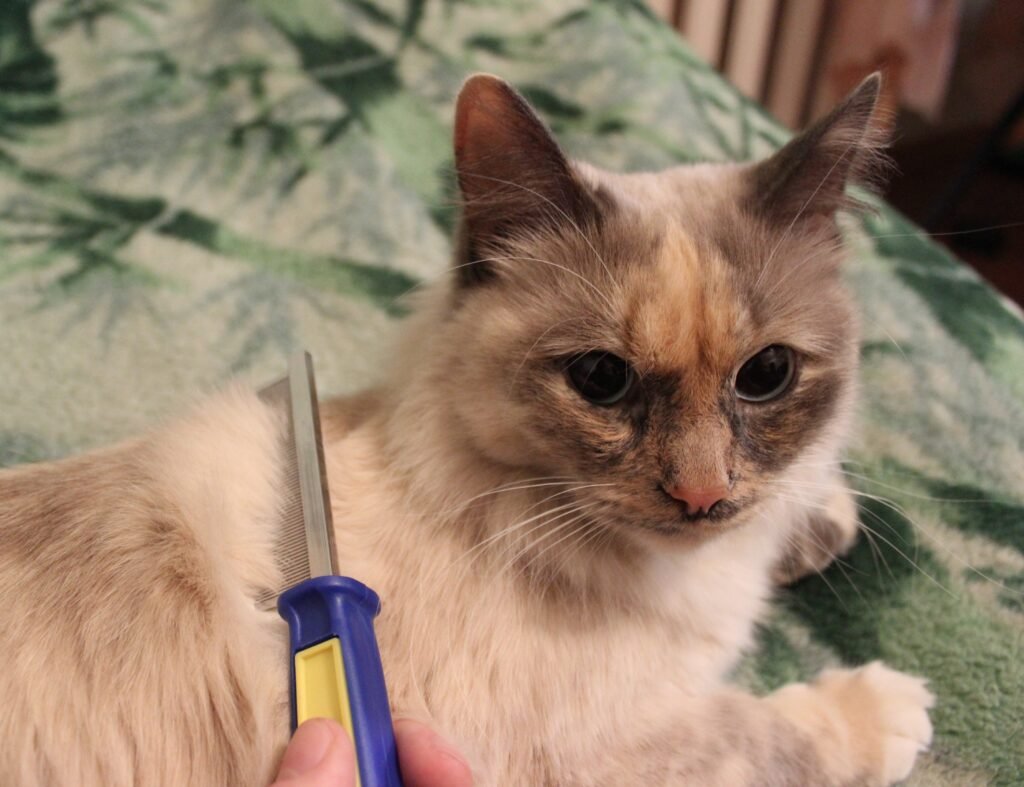
Start at the back and sides, then move to the chest, belly and legs, where mats form most easily. Brush with the fur, not against it.
When you hit a tangle, work it apart gently with your fingers or a wide-tooth comb, a few hairs at a time. Never pull a brush through a mat: pulling hurts, breaks the fur, and teaches a cat to dread the next session.
Tools for the Job
Three tool types cover most Siberian grooming, and each one does a different job.
A wide-tooth comb is the everyday tool for reaching the undercoat and finding small knots near the skin before they become mats. Use it first, and use it gently, especially behind the ears and under the legs.
A slicker brush has fine, close-set pins that lift loose fur from the top and middle of the coat. It is useful during the spring and fall coat-blow, when there is a lot of loose undercoat to remove. Use light strokes.
A de-matting tool splits a mat into smaller pieces so it can be combed out. It is not an everyday brush, and it needs a steady hand. If you are unsure how to use one, ask a groomer to show you, or leave the mat to a professional.
Seasonal Schedule
Spring and fall are the coat-blow seasons, when a Siberian sheds much of its undercoat. Brush daily during those weeks, and expect to remove a lot of loose fur. A missed week then can turn into mats behind the ears and under the legs.
In winter, the coat is at its thickest, so keep to the normal 2-3 sessions a week and pay extra attention to the belly and trousers. In summer, check for tangles too, and keep the routine going so brushing stays familiar.
For the full picture of how much Siberians shed, when the coat-blow happens and how to manage loose fur at home, see our guide to Siberian cat shedding.
Kitten Grooming
Start grooming while your Siberian is still a kitten, so brushing becomes routine before the adult coat grows in. Keep the first sessions very short and gentle, and finish while your kitten is still relaxed.
One grooming guide, MeongSiljang, reports starting kitten grooming from 8-10 weeks. Treat that as a starting point for gentle handling, not a veterinary rule. The exact week matters less than the habit: short, regular, gentle sessions from a young age.
Handle the paws, ears and belly gently during those early sessions, so later checks do not come as a surprise. For the first days at home, see our first-week guide for bringing home a Siberian kitten.
Bathing
Most Siberian cats only need a bath when they actually need one, for example if the coat is dirty or has something in it that brushing will not remove. The water-resistant outer layer keeps the coat clean, and frequent baths are not part of the routine for this breed.
When you do bathe a cat, use a product made for cats, rinse well, and dry the coat thoroughly. A thick triple coat holds water for a long time, and a damp undercoat can chill a cat and mat as it dries. Work through the coat with a comb as it dries, and check for tangles. Bath when the coat needs it.
Nails, Ears and Teeth
Use brushing time for a brief check of the rest of your cat. Look at the nails, and trim only the sharp tip if you know how to do it safely. If you are unsure, ask a groomer or your vet to show you.
Check the ears for dirt or redness, and wipe only the outer ear if needed, never deep inside. A regular check of the teeth lets you notice changes early, and a vet can advise on dental care.
This guide gives routine care only, not veterinary advice, and it makes no treatment claims. For anything beyond routine care, ask your vet. For more on common health issues in this breed, see our guide to Siberian cat health issues.
Mats: Prevention, Spotting and When to Get Help
Prevention is easier than removal. Regular brushing, daily in spring and fall, is the main defence, along with checking the mat-prone places: behind the ears, the armpits, the belly and the trousers.
Spot mats early by feel, not just by sight. Run your fingers through the coat during brushing and feel for a firm, tight clump close to the skin. The fur over a mat can look normal, while the mat underneath is already pulling.
A mat is a job for a professional groomer when it is tight against the skin, covers a large area, or causes pain, or when you cannot work it apart without pulling. Do not cut a mat out with scissors at home.
Professional Grooming
A professional groom usually covers a full brush-out, a check for mats, a bath if needed, drying, and nail trimming. Ask what is included before you book.
Ask the groomer how they handle long-haired cats, how they remove mats, and whether they have worked with Siberians before.
Almonte reports professional grooming every 8-12 weeks as a common interval. Treat that as commonly reported practice, not as this site’s own rule. Breeder guides also advise never to shave the coat, and that too is commonly reported practice: the triple coat regulates temperature, and shaving can leave it growing back unevenly.
For the wider picture of what owning a Siberian costs, see our guide to the cost of a Siberian cat.
Is Grooming a Lot of Work?
Honestly, it is regular work, but it is not heavy work. A Siberian’s coat needs attention every week, and daily attention in spring and fall, but the sessions themselves are short. Regular short sessions beat occasional long ones.
The work grows when the routine stops. Miss a few weeks in spring, and you are dealing with mats, loose fur everywhere and a cat that is out of practice. Keep the routine going.
Frequently Asked Questions
How often should I brush a Siberian cat?
Brush a Siberian cat 2-3 times a week normally, and daily when it is blowing coat in spring or fall. Short, regular sessions keep the triple coat free of tangles and make brushing a routine your cat expects.
Do Siberian cats need professional grooming?
Not as a rule. Regular home brushing is the routine, and a professional groomer is the option for mats, a full groom, or if brushing at home is not working. Almonte reports every 8-12 weeks as a common interval for professional grooming.
Can I shave a Siberian cat?
No. Breeder guides advise against shaving a Siberian cat, because the triple coat regulates temperature and grows back unevenly. Trim only a mat, with care, or leave it to a groomer.
When should I start grooming a Siberian kitten?
Start young, with short, gentle sessions, so brushing becomes routine. Keep the first sessions brief and calm, and build up slowly as your kitten gets used to being handled.
Do Siberian cats shed a lot?
They shed year-round and blow coat in spring and fall. See our guide to Siberian cat shedding for the full picture.
You might also like: Siberian Cat Shedding: What to Expect and How to Manage It
Last updated: 15 November 2026.
Sources: CFA Siberian breed profile; TICA Siberian breed; Purina Siberian cat breed